
Truck Accidents: Causes, Safety Issues, Liability Concepts, and What the Data Shows
Truck accidents are among the most devastating incidents on U.S. roadways. Because commercial trucks are significantly larger and heavier than passenger vehicles—often weighing up to 80,000 pounds—the injuries and property damage involved in these collisions can be severe. Tractor-trailers, delivery trucks, tankers, and big rigs are essential parts of the economy, but they also introduce substantial risks when mechanical issues, driver errors, or poor road conditions come into play.
This comprehensive guide explains the causes of truck accidents, contributing factors, common injuries, safety regulations, industry practices, and general legal principles that apply. It is designed as an educational resource, not legal advice or persuasive content.
1. What Is a Truck Accident?
A truck accident involves a collision between a large commercial vehicle and another vehicle, pedestrian, bicyclist, or roadside object. Types of trucks involved include:
-
Semi-trucks and tractor-trailers
-
Delivery trucks (FedEx, UPS, Amazon, etc.)
-
Box trucks
-
Dump trucks
-
Garbage trucks
-
Cement mixers
-
Tanker trucks transporting liquids or hazardous materials
-
Logging and agricultural transport vehicles
Truck accidents occur on highways, rural roads, city streets, loading zones, and construction sites.
2. How Common Are Truck Accidents?
Truck accidents are a major public safety concern.
Key national statistics include:
-
Over 500,000 large-truck crashes occur annually in the U.S.
-
Approximately 5,000 fatalities result each year from truck-related accidents.
-
More than 70% of people killed in truck accidents are occupants of smaller passenger vehicles.
-
Around 150,000 people suffer injuries in truck crashes annually.
-
The rate of serious truck accidents has increased over the past decade due to higher freight demand, driver shortages, and rising speeds on highways.
Trucks play a central role in commerce, and increased shipping needs amplify truck traffic nationwide.
3. Why Truck Accidents Happen: Primary Causes
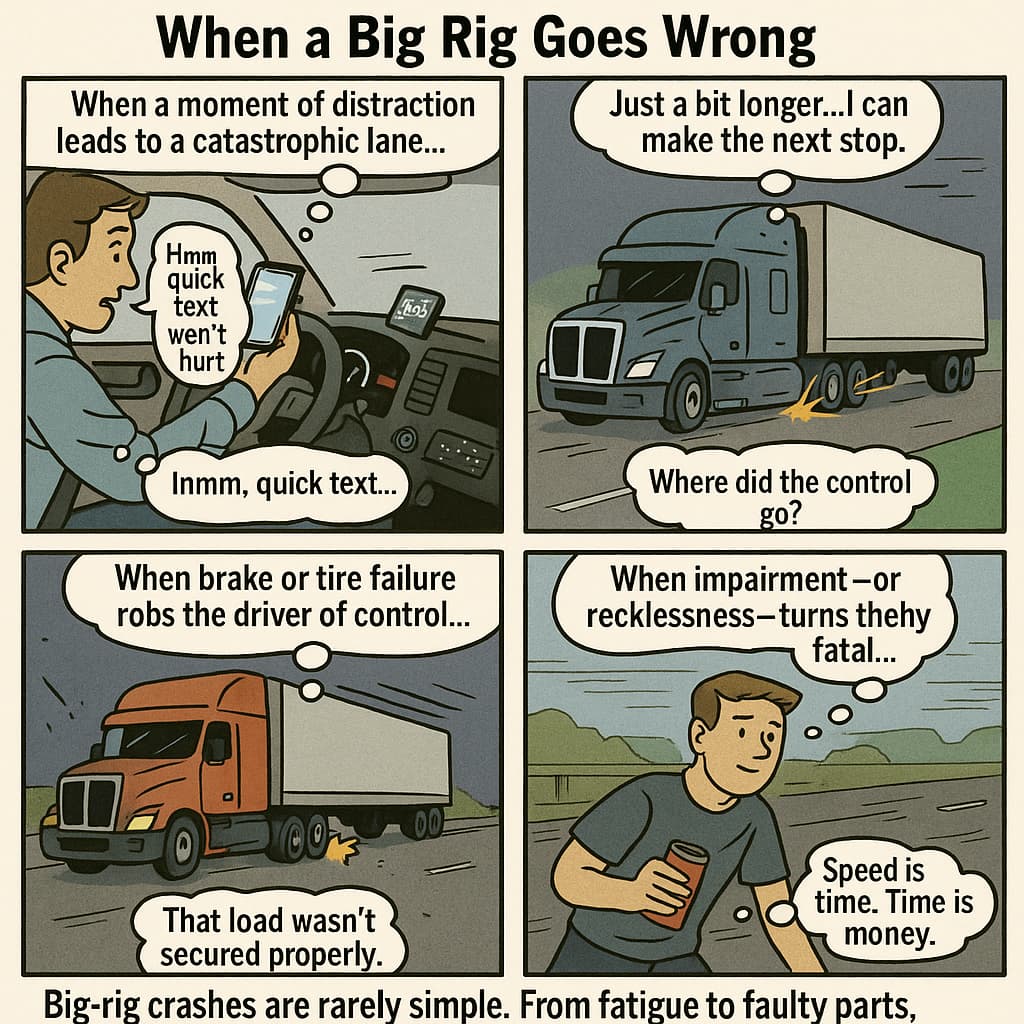
Truck accidents are often the result of multiple overlapping factors. Some of the most common causes include:
3.1 Driver Fatigue
Truck drivers often work long hours. Despite regulations limiting daily and weekly driving, fatigue remains a leading cause of truck accidents. Contributing factors include:
-
Unrealistic delivery schedules
-
Overnight driving
-
Sleep apnea or untreated medical conditions
-
Insufficient breaks
-
Circadian-rhythm disruptions
Fatigue reduces reaction time and impairs judgment similar to alcohol impairment.
3.2 Distracted Driving
Truck drivers may become distracted by:
-
Smartphones
-
GPS devices
-
Radio controls
-
Dispatch communications
-
Eating or drinking
-
Daydreaming or cognitive fatigue
Because trucks require long stopping distances, even a brief distraction can lead to catastrophic results.
3.3 Speeding and Aggressive Driving
Truck drivers under delivery pressure may:
-
Drive above posted speed limits
-
Tailgate slower vehicles
-
Make unsafe lane changes
-
Speed through construction zones
When a truck travels at high speed, the force of impact increases exponentially.
3.4 Mechanical Failures
Common mechanical issues include:
-
Brake failures
-
Tire blowouts
-
Steering malfunctions
-
Transmission failures
-
Suspension issues
-
Defective coupling devices
Mechanical failures may result from poor maintenance, manufacturing defects, or missed inspections.
3.5 Improper Loading of Cargo
Cargo that is improperly loaded or secured can cause:
-
Tipping and rollovers
-
Jackknifing
-
Spilled or shifting loads
-
Loss of vehicle control
-
Fires or chemical leaks (for hazardous materials)
Federal rules govern load distribution, securement, and weight limits.
3.6 Impaired Driving
Alcohol and drug impairment—whether through illegal drugs, prescription medications, or over-the-counter substances—can be a factor in truck crashes.
3.7 Poor Weather and Road Conditions
Hazardous conditions include:
-
Rain
-
Snow
-
Fog
-
Black ice
-
High winds
-
Construction zones
Trucks require much longer stopping distances in bad weather.
3.8 Inadequate Training or Experience
Driving a commercial vehicle requires specialized training. Inexperienced drivers may struggle with:
-
Handling long stopping distances
-
Navigating steep hills
-
Backing up in tight spaces
-
Managing turns and blind spots
Training standards vary among trucking companies and can impact crash rates.
4. Types of Truck Accidents
Different types of truck crashes have different causes and injury patterns.
4.1 Jackknife Accidents
Occurs when the trailer swings out to form a “V” shape with the cab. Common causes:
-
Sudden braking
-
Skidding
-
Weight imbalance
-
Slick roads
Jackknifing can block multiple lanes of traffic.
4.2 Rollover Accidents
These involve a truck tipping onto its side or roof. Rollovers may result from:
-
Speeding around curves
-
High center of gravity
-
Improper loading
-
Tire blowouts
-
Strong winds
Rollovers frequently cause major highway closures.
4.3 Rear-End Collisions
Because trucks require long stopping distances, they may rear-end vehicles when:
-
Traffic slows abruptly
-
Drivers follow too closely
-
Brakes fail
-
Weather reduces traction
Rear-end truck collisions are often severe.
4.4 Underride Accidents
In underride crashes, a smaller vehicle slides underneath the rear or side of a truck trailer. These collisions often result in:
-
Roof crush injuries
-
Fatal head trauma
-
Severe structural intrusion
Rear guards can reduce risk, but side underride guards are less common.
4.5 Blind-Spot Accidents
Trucks have large blind spots—known as “no-zones”—on all four sides. Common incidents include:
-
Lane-change collisions
-
Sideswipes
-
Vehicles becoming trapped between truck and guardrail
Passenger vehicles often underestimate truck blind spots.
4.6 Head-On Collisions
Though less frequent, head-on truck crashes are often fatal.
Causes include:
-
Driver fatigue
-
Distracted driving
-
Alcohol or drug impairment
-
Lane departure
-
Wrong-way driving
4.7 Wide-Turn Accidents
Trucks require extra space when turning, especially right turns. Passenger vehicles may become trapped between the truck and curb or trailer.
4.8 Lost-Load Accidents
Cargo spills create hazards for other vehicles. These may involve:
-
Lumber
-
Construction materials
-
Hazardous chemicals
-
Machinery
-
Food products
Improper securement is usually the root cause.
5. Common Injuries in Truck Accidents
Given the size and force involved, truck-accident injuries tend to be severe.
5.1 Traumatic Brain Injuries (TBI)
TBIs may include:
-
Concussions
-
Brain bleeding
-
Diffuse axonal injuries
-
Permanent cognitive impairment
These injuries may require long-term care.
5.2 Spinal Cord Injuries
These can include:
-
Herniated discs
-
Vertebral fractures
-
Partial or full paralysis
-
Chronic pain
Spinal injuries often result from violent impacts.
5.3 Broken Bones and Fractures
Fractures commonly involve:
-
Arms
-
Legs
-
Ribs
-
Pelvis
-
Facial bones
Multiple fractures are common in high-speed truck crashes.
5.4 Internal Organ Damage
Truck collisions can cause:
-
Lung injuries
-
Kidney damage
-
Liver trauma
-
Internal bleeding
These injuries are often life-threatening.
5.5 Burns and Chemical Exposure
Tankers and hazardous-material trucks may leak flammable or toxic substances, leading to:
-
Burns
-
Respiratory damage
-
Chemical poisoning
Fuel-fed fires can also occur after impact.
5.6 Amputations
Crushing forces may result in traumatic or surgical amputations.
5.7 Wrongful Death
Many truck crashes result in fatalities, especially in underride or head-on collisions.
6. Federal and State Trucking Regulations
Truck drivers and trucking companies operate under strict regulations to promote safety. These include:
6.1 Hours-of-Service (HOS) Rules
HOS rules limit:
-
Maximum daily driving time
-
Maximum weekly hours
-
Mandatory rest breaks
-
Required off-duty time
Electronic logging devices (ELDs) track compliance.
6.2 Vehicle Maintenance Requirements
Trucks must undergo:
-
Regular inspections
-
Brake testing
-
Tire and wheel checks
-
Documentation of maintenance
Mechanical failures often relate to poor compliance.
6.3 Weight and Cargo Rules
Federal rules regulate:
-
Maximum weight limits
-
Load distribution
-
Securement methods
-
Hazardous-material transport
Improper loading is a frequent cause of accidents.
6.4 Drug and Alcohol Testing Requirements
Drivers must undergo:
-
Pre-employment testing
-
Random testing
-
Post-accident testing
-
Return-to-duty evaluations
6.5 Commercial Driver’s License (CDL) Standards
Drivers must meet training, skills, and medical fitness standards.
7. Liability Concepts in Truck Accidents (Educational Overview)
Truck accidents often involve multiple parties. Although this guide provides general information—not legal advice—common sources of responsibility include:
7.1 Truck Drivers
Drivers may be responsible for:
-
Speeding
-
Distracted driving
-
Fatigue
-
Substance use
-
Violating HOS regulations
7.2 Trucking Companies
Companies may be involved when:
-
They fail to train drivers
-
They pressure unrealistic schedules
-
They neglect maintenance
-
They hire unsafe drivers
-
They violate federal regulations
7.3 Maintenance Providers
If maintenance was outsourced, inspectors or mechanics could be involved.
7.4 Cargo Loaders and Shipping Companies
They may be responsible for:
-
Improper loading
-
Weight violations
-
Failure to secure cargo
7.5 Truck or Part Manufacturers
Product liability may apply when:
-
Brakes fail
-
Tires blow out
-
Coupling devices malfunction
-
Steering components are defective
7.6 Government Entities
They may be responsible for:
-
Poor road design
-
Unsafe construction zones
-
Failure to maintain traffic signals
Government liability depends on jurisdiction and immunity rules.
8. Evidence Used in Truck Accident Investigations
Truck-accident investigations are often complex. Common forms of evidence include:
-
Electronic logging device (ELD) data
-
Driver logs
-
GPS data
-
Black-box or event recorder data
-
Maintenance records
-
Dashcam or surveillance footage
-
Vehicle inspections
-
Cargo loading documents
-
Cellphone records
-
Drug/alcohol test results
-
Police reports
-
Witness statements
-
Accident-reconstruction analysis
These investigations often involve multiple experts.
9. Factors That Make Truck Accidents More Severe
Several characteristics make truck crashes more destructive than typical car accidents:
9.1 Size and Weight Disparity
A fully loaded big rig can weigh 20–30 times more than a car.
9.2 Long Stopping Distances
A truck traveling 65 mph may need over 500 feet to stop.
9.3 High Center of Gravity
Increases risk of rollovers.
9.4 Blind Spots
Trucks have enormous “no-zones.”
9.5 Cargo Hazards
Hazardous materials can cause explosions or toxic exposure.
9.6 Roadway Impact
Truck accidents tend to involve multi-car pileups and major highway closures.
10. Long-Term Impacts of Truck Accidents
Truck-accident injuries often lead to ongoing consequences:
10.1 Physical Impacts
-
Mobility limitations
-
Long-term pain
-
Permanent disabilities
-
Need for surgeries
-
Extended rehabilitation
10.2 Psychological Effects
Survivors may experience:
-
PTSD-like symptoms
-
Anxiety about driving
-
Depression
-
Sleep disruption
10.3 Economic Effects
Truck accident injuries frequently cause:
-
Lost income
-
Long-term medical care
-
Home modifications
-
Loss of future earning capacity
Because of injury severity, financial impacts tend to be significant.
11. Truck Accident Safety and Prevention
Prevention requires cooperation among drivers, trucking companies, regulators, and passenger-vehicle motorists.
11.1 Safety Measures for Truck Drivers
-
Adequate rest and sleep
-
Compliance with Hours-of-Service rules
-
Regular training
-
Proper vehicle inspections
-
Avoiding distractions
-
Cautious driving in poor weather
11.2 Safety Measures for Passenger-Vehicle Drivers
-
Avoid driving in truck blind spots
-
Do not cut sharply in front of trucks
-
Leave extra space when merging
-
Pass trucks quickly and safely
-
Use headlights and signals clearly
-
Maintain safe following distances
11.3 Safety Improvements for the Industry
-
Better driver-fatigue monitoring
-
Enhanced braking technology
-
Lane-departure warning systems
-
Underride guards
-
Improved cargo-securement systems
-
Stricter maintenance standards
11.4 Government and Infrastructure Measures
-
Improved road design
-
Enforcement of speed limits
-
Dedicated truck lanes (in some regions)
-
Stricter inspections of commercial fleets
Truck accidents are among the most serious incidents on U.S. roads due to the size, weight, and complexity of commercial vehicles. These crashes often involve multiple factors—driver fatigue, load issues, mechanical failures, weather hazards, or regulatory violations—and they commonly result in severe injuries or fatalities.
Understanding the causes, risks, industry standards, investigative methods, and general liability concepts helps provide clarity about how and why truck accidents happen. This educational overview highlights the importance of strong safety practices, proper training, rigorous maintenance, and awareness from both truck drivers and passenger-vehicle motorists.
As freight movement continues to grow nationwide, improving truck safety remains a crucial component of reducing roadway injuries and protecting the public.