Slip and Fall Accidents: Causes, Liability, Safety Issues, and What Victims Should Know
Slip and fall accidents are among the most common causes of unintentional injury in the United States. They occur in homes, stores, workplaces, parking lots, and public spaces. Although slips and falls may seem minor, they can lead to serious injuries such as fractures, spinal damage, and brain trauma—especially for older adults and individuals with preexisting health conditions.
This guide provides a thorough, educational overview of slip and fall accidents, including why they happen, what types of injuries result, how liability is typically assessed, and what environmental and safety factors contribute to risk. It is not legal advice but an informational resource designed to help readers better understand the issues involved in these incidents.
1. What Is a Slip and Fall Accident?
A slip and fall accident occurs when a person loses traction, balance, or stability and falls due to a hazardous condition on a walking surface. These accidents are categorized under “premises liability,” which refers to the responsibility of landowners and property managers to maintain reasonably safe environments.
Slip and fall incidents include:
-
Slipping on wet floors, spills, or ice
-
Tripping over uneven surfaces, loose cords, or obstacles
-
Losing balance on poorly lit stairways or broken steps
-
Falling due to unstable flooring or structural defects
These incidents can occur inside buildings, outdoors, or in transitional areas such as entryways.
2. How Common Are Slip and Fall Injuries? National Overview
Slip and fall accidents are a major source of injuries across age groups.
Key data shows:
-
More than 1 million emergency room visits each year in the U.S. are related to slips and falls.
-
Falls are the leading cause of injury in older adults, contributing to hip fractures, head injuries, and long-term disabilities.
-
Workplace slip and fall injuries account for over 30% of all workers’ compensation claims.
-
Falls are a leading cause of injury-related deaths for people aged 65 and older.
These figures highlight how significant slip and fall accidents are to public health and safety.
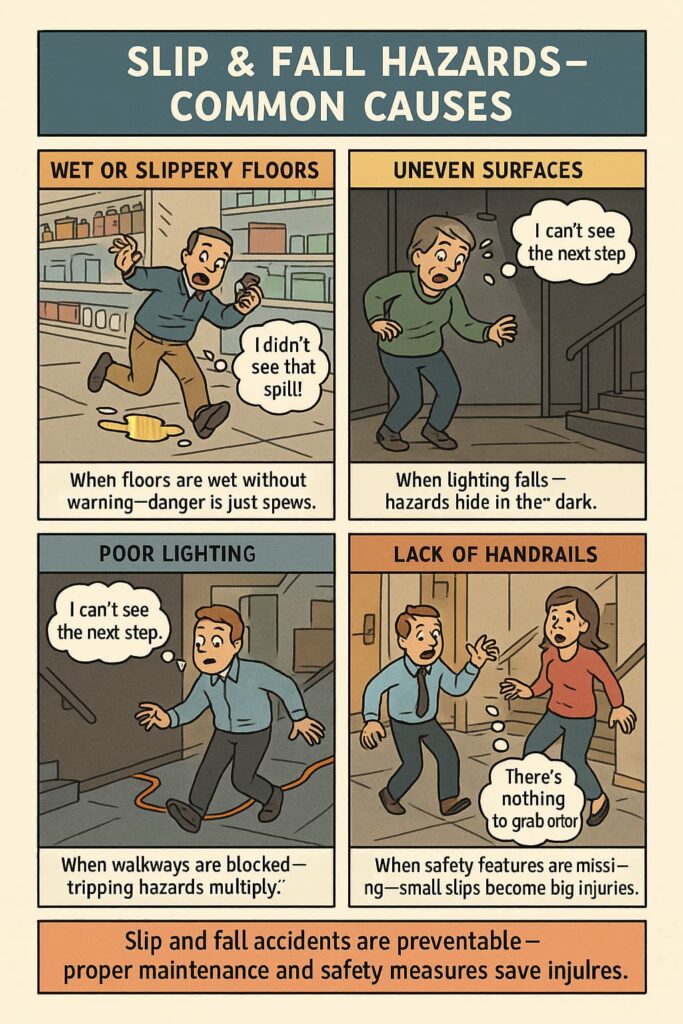
3. Common Causes of Slip and Fall Accidents
Slip and fall accidents can result from many environmental or human factors. The most common causes include:
3.1 Wet or Slippery Surfaces
This is the number one cause of slip and fall accidents. Examples include:
-
Water on grocery-store floors
-
Spills in restaurants
-
Recently mopped or waxed floors without warning signs
-
Rainwater tracked into entryways
-
Condensation near coolers or refrigeration units
-
Ice, slush, or snow on walkways
Slippery surfaces reduce traction and make it difficult to maintain balance.
3.2 Uneven or Damaged Flooring
Even a small change in elevation can cause a fall. Common hazards include:
-
Cracked tiles
-
Loose floorboards
-
Uneven concrete slabs
-
Holes in pavements
-
Torn or bunched carpets
-
Broken sidewalks
-
Improperly installed mats
Uneven surfaces often cause tripping rather than slipping.
3.3 Poor Lighting
When lighting is inadequate, hazards become harder to see. Poor lighting contributes to accidents in:
-
Stairwells
-
Parking garages
-
Sidewalks
-
Hallways
-
Apartment complexes
-
Outdoor entrances
Low visibility increases risk even on otherwise safe surfaces.
3.4 Obstacles and Clutter
Items and debris left in walkways create tripping hazards, such as:
-
Boxes in store aisles
-
Cords or wires across floors
-
Tools or equipment in workplaces
-
Extension cords in offices
-
Open drawers
-
Loose gravel or debris outdoors
Clutter-related falls are common in retail and construction environments.
3.5 Defective or Missing Handrails
Handrails are critical safety devices. Problems include:
-
Loose handrails
-
Missing handrails on stairways
-
Railings that are too low or improperly installed
-
Handrails not extending the full length of stairs
Without proper support, a minor trip can lead to a major fall.
3.6 Weather Hazards
Property owners and managers must often address natural conditions such as:
-
Ice
-
Snow
-
Wet leaves
-
Mud
-
Pooled rainwater
Failure to clear these hazards within a reasonable time increases slip and fall risks.
3.7 Improper Footwear
Although footwear is a personal choice, certain environments require appropriate shoes. Falls can occur when:
-
Shoes have worn treads
-
High heels reduce stability
-
Workers lack slip-resistant footwear
-
Footwear is inappropriate for icy weather
This factor often contributes to, but does not necessarily cause, accidents.
4. Where Slip and Fall Accidents Most Frequently Occur
Slip and fall incidents can happen anywhere, but certain locations present higher risks.
4.1 Retail Stores and Supermarkets
These locations pose risks due to:
-
Spills in aisles
-
Dropped products
-
Wet produce areas
-
High foot traffic
-
Busy employees unable to monitor hazards constantly
Slip and fall accidents in retail environments are extremely common.
4.2 Restaurants and Food Courts
Food and drink spills, greasy floors, and clutter make these environments hazardous.
4.3 Workplaces and Industrial Sites
Slip and fall risks are heightened in:
-
Warehouses
-
Construction sites
-
Factories
-
Hospitals
-
Commercial kitchens
Wet floors, fast-paced work, and heavy equipment increase injury severity.
4.4 Apartment Buildings and Homes
Common residential hazards include:
-
Loose carpeting
-
Poor lighting
-
Broken stairs
-
Overflowing bathtubs or sinks
-
Wet patios or balconies
Landlords may be responsible for unsafe common areas.
4.5 Public Sidewalks and Parking Lots
These outdoor spaces are prone to:
-
Cracked or raised concrete
-
Potholes
-
Ice accumulation
-
Poor drainage
-
Insufficient lighting
Falls in these areas may involve municipal or private liability depending on location.
4.6 Hotels and Resorts
Slip and fall hazards include:
-
Pool decks
-
Bathtubs and showers
-
Lobbies with tile flooring
-
Wet hallways during cleaning
Hotels serve thousands of guests and must frequently monitor conditions.
5. Common Injuries Resulting From Slip and Fall Accidents
Slip and fall injuries range from mild to severe. Some require long-term medical care.
5.1 Fractures and Broken Bones
Hip fractures are especially serious for older adults, often requiring:
-
Surgery
-
Assisted living
-
Physical therapy
Other fractures include wrists, ankles, ribs, and arms.
5.2 Traumatic Brain Injuries (TBI)
A fall can cause:
-
Concussions
-
Brain bleeding
-
Skull fractures
-
Cognitive impairments
TBIs are common among adults aged 65 and older.
5.3 Spinal Cord and Back Injuries
These may involve:
-
Herniated discs
-
Nerve damage
-
Vertebral fractures
-
Chronic back pain
Falls are a leading cause of spinal cord trauma.
5.4 Soft Tissue Injuries
These include:
-
Sprains
-
Strains
-
Bruises
-
Tendon injuries
-
Whiplash-like symptoms
Soft tissue injuries may seem minor but can cause persistent pain.
5.5 Shoulder and Knee Injuries
Falling awkwardly can lead to:
-
Rotator-cuff tears
-
Dislocated shoulders
-
Meniscus tears
-
ACL injuries
Joint injuries may require surgery.
5.6 Facial Injuries
These involve:
-
Broken noses
-
Dental damage
-
Jaw fractures
-
Eye injuries
Falls can permanently affect appearance and function.
6. Understanding Premises Liability in Slip and Fall Cases
Slip and fall incidents fall under premises liability law. Although specific rules vary by jurisdiction, some general concepts apply broadly.
6.1 Duty to Maintain Reasonably Safe Premises
Property owners, managers, and sometimes tenants must:
-
Inspect the property regularly
-
Repair hazards promptly
-
Provide warnings about dangers
-
Clean spills or eliminate hazards within a reasonable time
What is considered “reasonable” varies depending on the situation.
6.2 Categories of Visitors
Liability may differ depending on the visitor’s status:
Invitees
People invited for business purposes, such as customers. They receive the highest level of protection.
Licensees
Social guests or individuals entering property for non-business purposes.
Trespassers
Typically owed fewer protections, though exceptions exist for children (e.g., attractive nuisance doctrine).
6.3 Actual vs. Constructive Notice
Property owners may be responsible if:
-
They knew of the hazard (actual notice), or
-
They should have known through reasonable inspection (constructive notice)
Examples:
-
A spill that occurred seconds before a fall may not create liability.
-
A puddle left for hours may indicate negligence.
6.4 Foreseeability
Liability often depends on whether the hazardous condition was foreseeable. For example:
-
Spills in grocery stores are foreseeable and must be monitored.
-
Ice accumulation on sidewalks during storms may require salting or shoveling.
7. Evidence Commonly Involved in Slip and Fall Evaluations
Investigating a slip and fall incident may involve collecting:
-
Photos or video of the hazard
-
Incident reports
-
Witness statements
-
Weather reports (for outdoor falls)
-
Maintenance logs
-
Surveillance footage
-
Footwear worn at the time
-
Medical records
Video evidence, in particular, can be critical.
8. Factors That Influence Slip and Fall Evaluations
Different slip and fall situations produce different outcomes. Influential factors include:
-
How long the hazard was present
-
Whether warning signs were used
-
Lighting conditions
-
Prior similar incidents
-
Weather conditions
-
Type of footwear
-
Whether the person was distracted
-
Condition of the property
-
Industry safety standards
Because of these many variables, similar falls may have different evaluations.
9. Common Defenses Used in Slip and Fall Disputes
Property owners may raise multiple defenses, including:
9.1 Open and Obvious Hazard
If the hazard was clear and avoidable, it may reduce or eliminate liability.
9.2 Comparative Fault
If the person was partially responsible (e.g., running, texting), fault may be shared.
9.3 No Notice
If the hazard appeared moments before the fall, the owner may argue they had no opportunity to fix it.
9.4 Assumption of Risk
In rare cases, a person may knowingly encounter a hazard.
10. Preventing Slip and Fall Accidents
Both property owners and individuals can take steps to reduce risks.
10.1 Property Owners
-
Regularly inspect premises
-
Use warning signs during cleaning
-
Fix uneven flooring
-
Improve lighting
-
Install secure handrails
-
Remove clutter
-
Maintain outdoor walkways
-
Salt icy areas promptly
Safety programs and checklists reduce risk significantly.
10.2 Individuals and Employees
-
Wear appropriate footwear
-
Stay alert in high-traffic areas
-
Use handrails
-
Report hazards
-
Walk carefully on wet or slippery floors
-
Avoid distractions like texting while walking
Employees should follow workplace safety policies.
11. Long-Term Impact of Slip and Fall Accidents
Slip and fall injuries can have long-term consequences, including:
11.1 Physical Effects
-
Chronic pain
-
Reduced mobility
-
Permanent disabilities
-
Need for surgeries
-
Long-term rehabilitation
11.2 Psychological Effects
Falls may cause:
-
Anxiety
-
Fear of walking
-
Loss of independence (especially in older adults)
-
Depression
11.3 Financial Effects
Costs may include:
-
Medical bills
-
Rehabilitation
-
Lost income
-
Home modifications
-
Long-term care needs
Families may also face caregiving burdens.
12. Special Considerations for Older Adults
Slip and fall accidents are especially dangerous for seniors due to:
-
Decreased bone density
-
Vision loss
-
Reduced balance
-
Muscle weakness
-
Chronic health conditions
Hip fractures among older adults can significantly reduce life expectancy and independence.
Slip and fall accidents are a significant public safety issue that affects individuals in homes, workplaces, and public spaces. They can result from a wide variety of hazardous conditions—wet floors, poor lighting, uneven surfaces, cluttered walkways, or weather-related dangers. Understanding how these accidents happen, what injuries they cause, and how responsibility is generally evaluated helps individuals make informed decisions about safety and prevention.
This comprehensive educational overview highlights the key aspects of slip and fall accidents, including common causes, injuries, premises liability principles, investigative processes, and long-term impacts. As environments evolve and public spaces become more complex, both property owners and individuals must remain vigilant to reduce fall-related injuries.